
Neptune Play Verification: KYC, ID Checks and Withdrawals
 Available in GB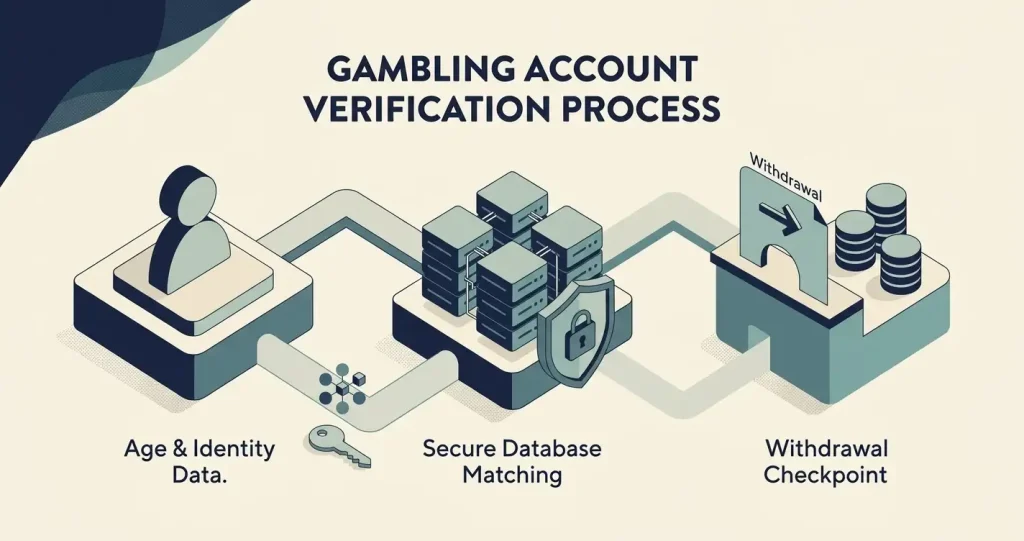
UK verification guide
Neptune Play users in Great Britain should expect identity verification before gambling. UKGC rules require remote licensees to verify a customer’s identity, including name, address and date of birth, before play. Exact document requests and completion times can vary by account and are not set by a universal UKGC timetable. For the broader casino overview, see the Neptune Play review.
Table of Contents
What UK rules require Neptune Play to verify
For a Great Britain remote gambling account, identity verification starts before gambling rather than at cashout. The Gambling Commission’s customer identity condition requires applicable remote licensees to obtain and verify enough information to establish a customer’s identity before that customer is allowed to gamble. The minimum information includes name, address and date of birth.
This gives Neptune Play users a useful baseline. The operator needs to establish who is behind the account, but the public rule does not prescribe one universal document pack that every customer must upload. Verification can involve electronic or database matching, and a request for documentary evidence can follow where the information cannot be confirmed adequately or where another legal obligation requires more evidence.
The distinction matters because phrases such as “KYC check” often make the process sound like a single upload screen. In practice, the regulatory requirement is about the result – a verified identity – rather than one fixed user interface. A customer whose details match reliably may experience a different journey from somebody whose address, name or payment information creates a mismatch.
Verification may be completed electronically or may require additional documentary evidence when the initial information cannot be confirmed adequately. Follow the secure request shown in the account rather than assuming that every customer receives the same document checklist. The broader registration context is covered in the Neptune Play account.
When document requests can happen
An identity check can begin with information already supplied during registration. The UKGC requirement says that the operator must verify the customer’s name, address and date of birth before gambling. It does not say that each customer must be asked for the same physical document, nor that every later check has to happen before the first deposit.
If electronic checks do not give enough assurance, the operator can ask for additional evidence. Later requests can also arise when the operator has another legal obligation, for example when account activity creates a need for further anti-money-laundering or risk-based checks. That is why completing the basic identity stage does not create a permanent exemption from all future verification.
The useful way to read a request is to ask what it is trying to establish. A request to confirm identity is different from a request triggered by a new transaction pattern or another legal obligation. If the operator asks for information, use the secure account route presented to you and check that the request is connected to your actual account before sending sensitive material.
Do not try to solve a mismatch by opening another account with altered details. Consistency between your registered name, current address, date of birth and payment ownership is more useful than guessing which document might pass a check. If a detail is wrong, the safer approach is to correct it through the account or support process.
A request for additional evidence does not automatically mean the initial registration was incorrect. Electronic checks can confirm some customers with the basic identity information already supplied, while another account may need extra evidence because the available records do not give the same level of confidence. The practical response is to follow the request shown in the secure account area and provide only the information that is actually asked for, rather than sending a broad collection of documents in advance.
Verification and withdrawals
The withdrawal rule is especially important. A request to withdraw must not become the point at which an operator first demands additional information if it could reasonably have asked for that information earlier. The UKGC has repeated this requirement in current guidance and in a 2026 reminder to remote operators.
That does not mean every withdrawal must be processed without any further question. The licence condition expressly allows information to be requested at that time when another legal obligation genuinely requires it. The practical test is therefore not “was I asked for anything at withdrawal?” but “could this information reasonably have been requested earlier, or has a new legal reason arisen now?”
A delayed cashout can involve different regulatory situations. An earlier-requestable basic identity check is not the same as a later check prompted by a legal obligation that became relevant after account activity, and another customer’s complaint cannot show which situation applies to your account.
If a withdrawal is being held for verification, keep a record of what was requested, when it was requested and what you supplied. Ask support to identify any outstanding requirement clearly. For payment-method context, see the withdrawals.
The withdrawal stage is therefore best understood as a checkpoint, not as the normal starting point for identity verification. Core age and identity checks belong before gambling, while later checks can still be legitimate where new information or a legal requirement arises. If a cashout is held for verification, read the request carefully and distinguish a new, relevant check from information that could reasonably have been requested earlier. Keep the payment and identity details on the account consistent so that any required review is based on matching information.
How long verification can take
There is no universal UKGC rule promising that every verification check will finish within 24 or 48 hours. Completion time depends on what is being checked, whether supplied details match, whether extra information is required and how quickly the customer responds.
Timing depends on what is being checked, whether supplied details match, whether extra information is required and how quickly the customer responds. A straightforward electronic match can be very different from a case that needs documentary review or a later legal check.
A practical approach is to provide accurate information, respond through the verified account channel, and check whether the operator has identified a specific unresolved item. If another site quotes a precise Neptune Play KYC time, confirm it against current operator information rather than treating it as a regulatory guarantee.
Practical preparation without oversharing
Before registration, make sure the personal details you intend to use are current and consistent. Use your real name, current residential address and correct date of birth. Keep access to the email or contact method attached to the account, and use payment methods that belong to you.
If Neptune Play asks for evidence, provide only what the secure request actually requires. Do not send identity documents to an address or social-media profile simply because somebody claims to represent support. If the purpose of a request is unclear, confirm it through the account’s official support route before transmitting sensitive material.
It is also reasonable to ask why a later request is necessary if you already passed basic identity checks. The answer may be legitimate: UK rules permit additional information where another legal obligation requires it. The important point is that the operator should not manufacture withdrawal friction by waiting until cashout to ask for information it could reasonably have requested earlier.
A final preparation point is to keep your account information stable while a check is open. Changing contact details or payment information mid-review can create new questions that did not exist when the check began. If a genuine change is necessary, record it accurately and explain it through the operator channel rather than trying to make the account resemble an older record.
It also helps to keep a simple record of what the operator asked for and what you supplied through the secure account channel. The purpose is not to send extra material pre-emptively, but to avoid losing track of a request if support later refers back to it. Consistent names, addresses, contact details and payment ownership make the account easier to explain than a trail of different versions of the same information. If a request changes, read the new wording before sending anything further.
Keep copies or access to the records you normally use to confirm your identity and address, but wait for the account to specify what is needed before uploading anything. That keeps the process focused and avoids sharing extra personal information that has not been requested.
What Neptune Play verification means before your first cashout
For UK players, the core sequence is clear: Neptune Play must establish identity before gambling, using at least name, address and date of birth, while later checks can still occur when a genuine legal obligation requires more information. A withdrawal should not be used as the first opportunity to demand information that reasonably belonged earlier in the relationship.
Exact Neptune Play document bundles and completion times can vary. Prepare accurate account details, use the secure verification channel you are given, and keep records of any later request. This follows the UKGC distinction between baseline identity checks and later checks required for a genuine legal reason.
For the regulatory basis behind these checks, see the UKGC rules.
Recommend

Neptune Play Games: Slots, Table Games and Software Providers
Game library guideNeptune Play's casino catalogue is best understood by category rather than by a...

Neptune Play Bonus UK: Current Offer, Wagering Rules and Terms
UK bonus guideThe most important fact about a Neptune Play bonus in the UK is...
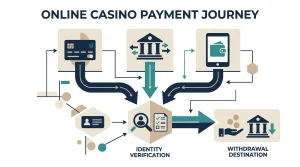
Neptune Play Payment Methods UK: Deposits, Withdrawals and Limits
UK payments guideNeptune Play is currently associated with a broad set of UK-facing payment routes,...

Neptune Play Mobile Casino: Browser Play and App Availability
UK mobile guideNeptune Play supports mobile-browser play, so UK users can access the casino through...
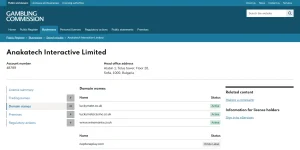
Neptune Play Licence and Safety: UKGC Status and Player Protections
UK licence checkThe current UK Gambling Commission register maps neptuneplay.com to Anakatech Interactive Limited, account...
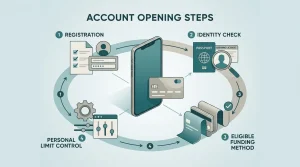
Neptune Play Account Guide: Registration, Login and UK Player Checks
UK account guideOpening a Neptune Play account in the UK is not just a username-and-password...